Working with undertones
Brown, amber, red, gray, and neutral influences can become more noticeable beside cabinets, painted trim, and existing wood.
Color Decisions Grounded in Real Wood
A successful stain color responds to the wood species, room light, surrounding finishes, and the natural variation that makes hardwood distinctive.
Request a Free EstimateService Overview
Wood absorbs stain according to species, grain, preparation, and individual board character. The same sample can shift under daylight and artificial light.
MGM uses project samples and surrounding woodwork as references while setting realistic expectations: new and existing materials may coordinate closely without becoming identical.
The MGM Approach
Samples narrow the direction while the actual floor reveals how color behaves across grain and changing light.
Review inspiration, existing woodwork, adjoining floors, and desired depth of color.
Consider species, age, condition, and how preparation may affect absorption.
Compare practical color directions on representative wood or prepared project areas.
Look at undertones in multiple locations and lighting conditions.
Coordinate the selected stain direction with the planned finish appearance.
Service Considerations
A good match belongs with the surrounding interior even when natural materials prevent exact duplication.
Brown, amber, red, gray, and neutral influences can become more noticeable beside cabinets, painted trim, and existing wood.
Earlywood, latewood, grain direction, repairs, and board age can produce lighter and darker areas within the same approved stain direction.
Project Details
A small sample is useful, but it should be read as part of the room rather than in isolation.
MGM Project Photography
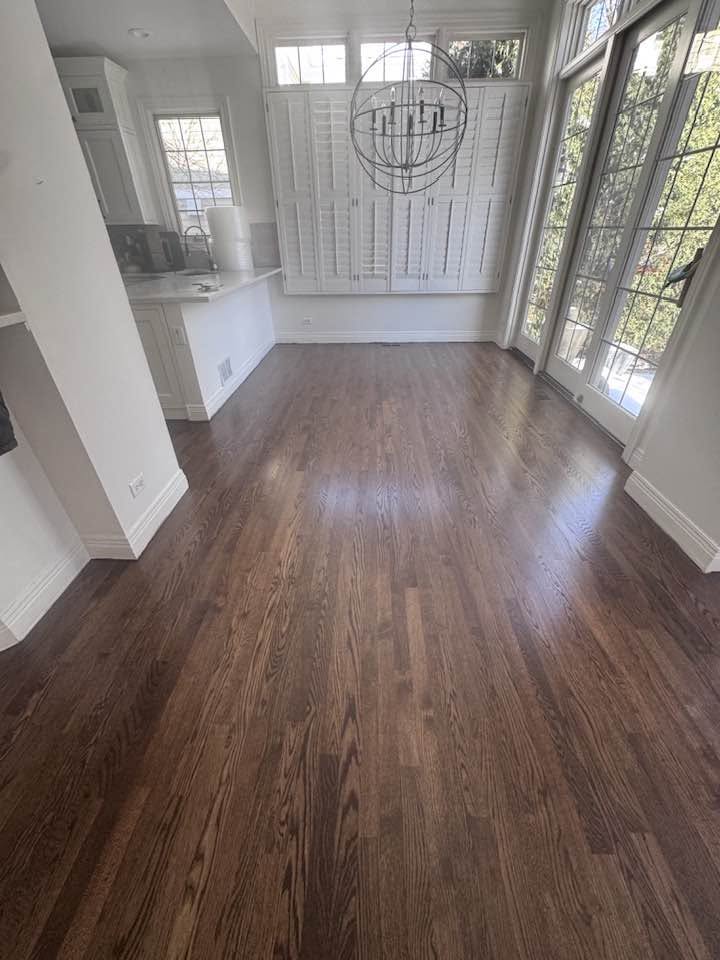
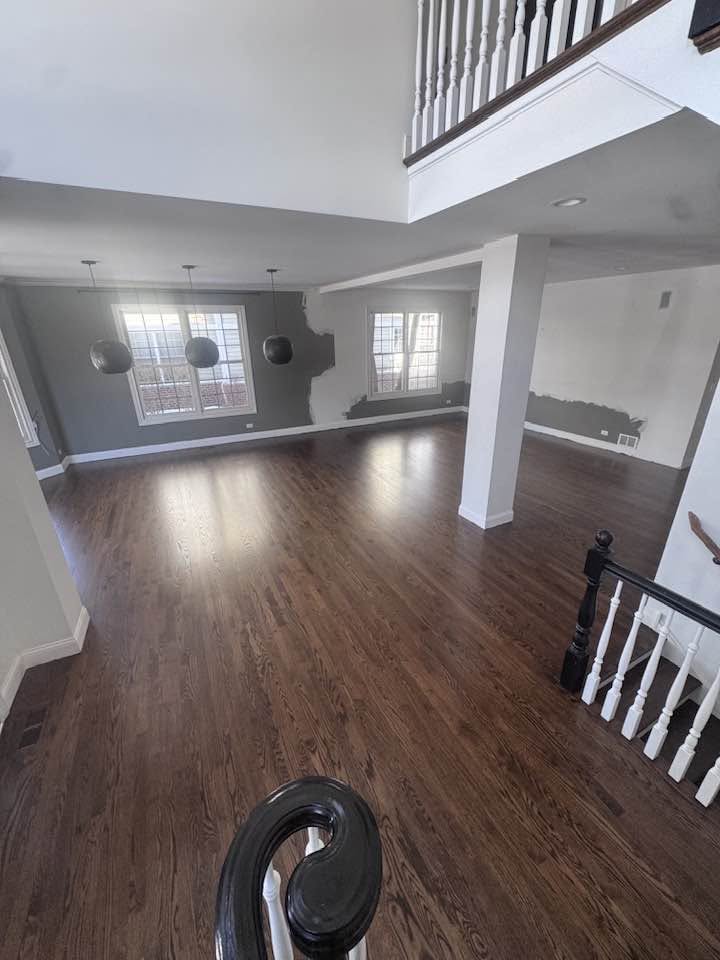
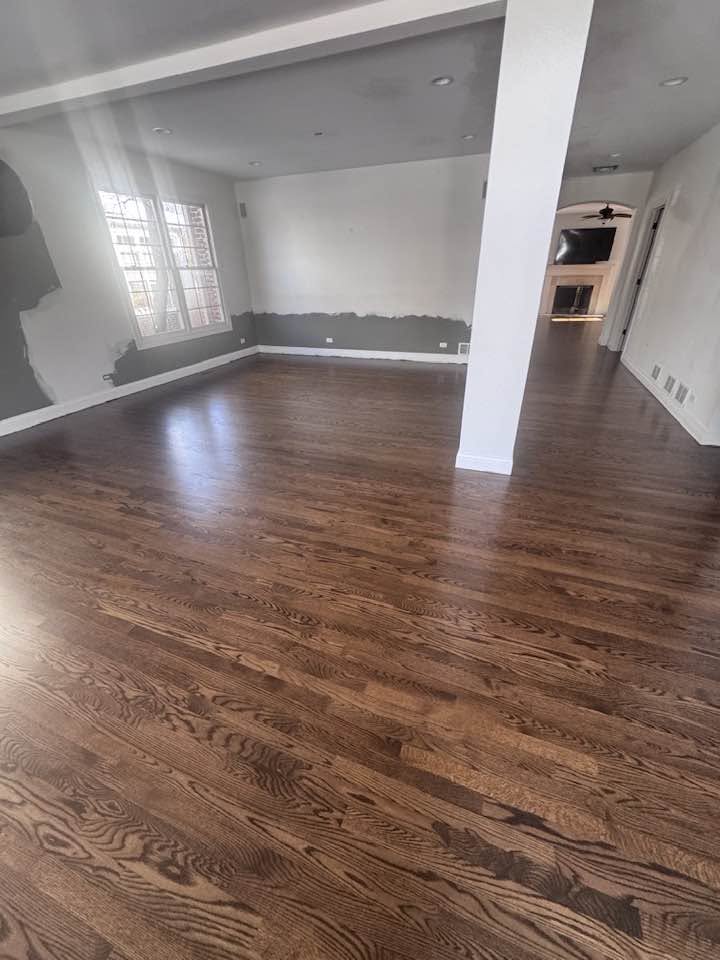
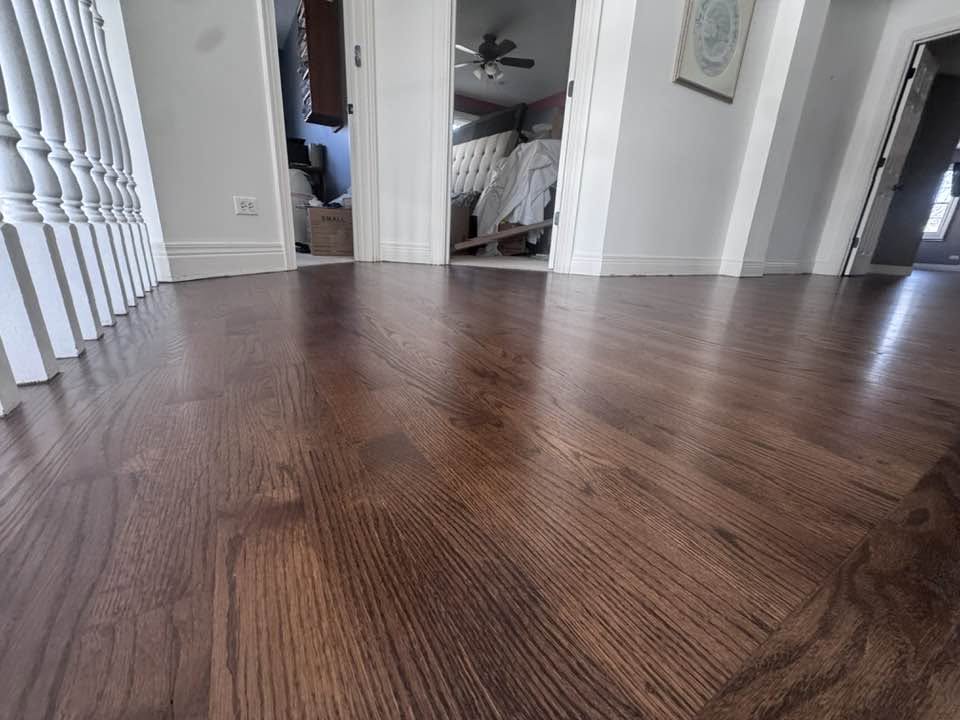
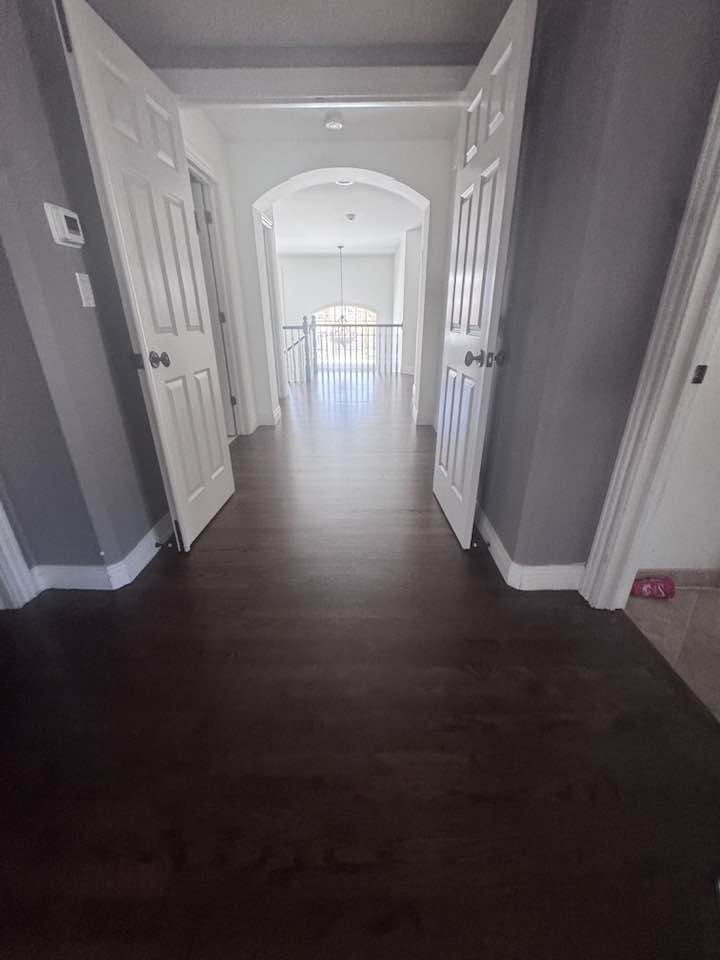
MGM photography showing several dark wood tones and the natural variation that remains visible after staining.
Local Service
MGM Floors provides custom hardwood staining and color-matching guidance for Chicago and nearby suburban projects. The wood and lighting should be evaluated on site before a final color direction is confirmed.
Contact MGM Floors to discuss the property and current project conditions.
Frequently Asked Questions
Not always. Species, age, oxidation, previous finish, sanding, and light exposure can create differences even when colors coordinate closely.
Natural grain density and board character affect absorption, producing variation that remains part of a real wood floor.
Both. A color may read differently during the day, in shadowed areas, and under the room’s evening lighting.
Possibilities depend on the wood, previous stain penetration, damage, and sanding history. The floor needs to be evaluated before expectations are set.
Sheen does not replace stain color, but reflected light can make the finished surface appear deeper, brighter, or more revealing of texture.
Start the Conversation
Bring MGM Floors your color references and existing finish details to begin a realistic sample conversation.